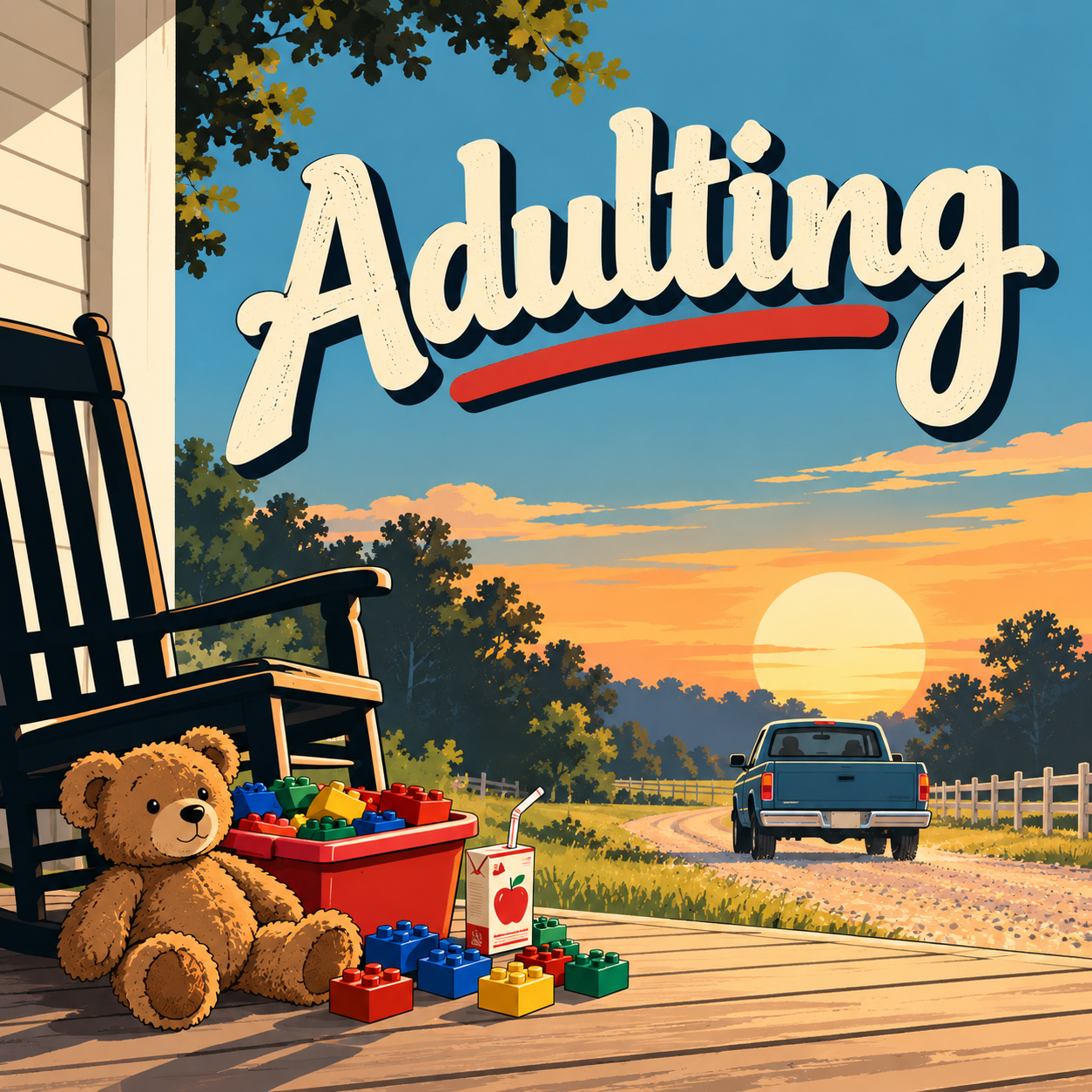
Adulting
By Ricky Fitzpatrick | The Southernist
Our youngest son is seventeen.
It seems like just yesterday he was sitting in his bedroom, building LEGOs, drinking juice boxes, and climbing up in my lap to watch TV. Now he’s driving a car, making plans, kissing a girl, and discussing his future as though he has every intention of becoming a grown man.
And I have to confess…I’m not entirely convinced that we’re ready. Nor is he, for God’s sake.
Of course, when I look at him objectively, I realize he’s probably considerably more prepared for adulthood than I ever was. At seventeen, I was still trying to figure out how to get through a Saturday night without getting myself caught. Or grounded.
But that’s beside the point.
The point is, our children are growing up, and apparently there’s not a blessed thing we can do about it.
They even have a word for it now.
Adulting.
I’m not sure when being a grownup became a verb. But apparently, somewhere along the way, the younger generation decided to rename the whole business without consulting those of us who’ve been doing it for years. They just did it.
And while growing up has always involved a certain amount of apprehension, I wonder if we’ve made the whole business a little more intimidating than it needs to be. Especially down here in the South.
I’ll be the first to admit that I don’t know a great deal about raising children in other parts of the country. I’ve spent most all my life right here, and my expertise on the subject is limited to what I’ve observed through television, occasional travel, and conversations with people who talk funny. But I like to think there’s something particularly useful about growing up Southern.
I’m not necessarily talking about knowing how to skin a buck, run a trotline, or the many other things that Hank Williams, Jr., taught us. (Although, depending on how things go in Washington, those might turn out to be valuable skills.) I’m talking about the sort of practical education that doesn’t come with a textbook.
Around here, children grew up watching their daddies work on cars, their granddaddies repair things that ought to have been thrown away years ago, and their mamas stretch a twenty-dollar bill into a week’s worth of potatoes and cornmeal mush for a family of six.
They learned that a lawnmower doesn’t necessarily need replacing just because it won’t crank. They learned that a clean car seems to run better, even though there’s absolutely no mechanical explanation for it.
They learned how to scrub a whitewall tire with an SOS pad, how to change their own oil, and that a steak cooked on your own grill tastes considerably better when you haven’t paid forty-seven dollars for somebody else to prepare it.
We didn’t take classes in personal finance. But we watched our parents decide which bills needed paying first.
We didn’t attend seminars on conflict resolution. We learned how to get along with people at church, at school, and at the ball field, even when we didn’t particularly like them.
And we learned that, especially in a small Southern town, the fellow you’re arguing with today might be the same fellow you need to pull your truck out of a ditch tomorrow.
Our parents didn’t supervise every decision we made. They couldn’t. They had jobs to do, bills to pay, and enough problems of their own without managing every minute of our lives. So we were allowed to make mistakes.
We wrecked cars. We burned chicken. We ruined perfectly good shirts in the washing machine. We lost wallets, misplaced keys, bounced checks, and occasionally discovered that the gas hand was not merely a suggestion.
And somehow, we survived.
But more importantly, we learned.
I wonder if part of the reason so many young people seem so anxious about adulthood is that we’ve spent too much time trying to protect them from it.
We’ve warned them about every danger, anticipated every problem, and worked our own selves half to death trying to make sure they never experience the disappointments and difficulties we endured.
And I understand that. There’s not a parent alive who enjoys watching their child struggle. But somewhere along the way, we may have forgotten that struggling is how people learn to do things.
There was a certain independence that came with growing up in our day. An independence that, many times, you only got from picking yourself up from your very own personal disaster.
I’m not suggesting we throw our children out into the world with a suitcase, a pocketknife, and twenty dollars, then wish them the best. (Although, come to think of it, that’s not awful far from how some of us got started.) But I’m suggesting that we give them a little credit.
These kids are smart. They’ve grown up in a world considerably more complicated than the one we knew. They understand technology we can barely operate. They’re navigating social pressures we never imagined, and they’re preparing for careers that didn’t even exist when we were their age.
And somehow, they’re figuring it out.
They may not know how to adjust a carburetor, but they can probably find a YouTube video that’ll show them. They may not know how to balance a checkbook, but then again, when’s the last time you actually wrote a check?
The world changes. And our children change with it.
But I hope we’ve managed to pass along a few things that don’t change.
The value of honest work. The importance of keeping your word. The satisfaction of fixing something yourself. The wisdom of spending less than you earn.
And the understanding that being a grownup doesn’t mean knowing all the answers. But it does mean being willing to figure them out.
I look at our son these days and see a young man who’s increasingly capable of making his own decisions, solving his own problems, and finding his own way. And I’m proud of him.
Damn proud.
But every now and then, I still see that little boy sitting in the floor, surrounded by LEGOs, asking me to help him build something. And I’d give just about anything to sit down there with him one more time.
I suppose that’s the part of adulting nobody warns you about.
You spend eighteen years teaching your children how to live without you, only to discover that you’re the one who hasn’t figured out how to let go.
So, no, I’m not entirely sure we’re ready for him to grow up. But the more I think about it, the more I realize that he probably is.
He’ll make mistakes. He’ll learn things the hard way. He’ll discover that life doesn’t always cooperate with your plans, and that sometimes the only thing you can do is roll up your sleeves and get to work.
After all, he’s got to have some adulting stories of his own to tell someday.